
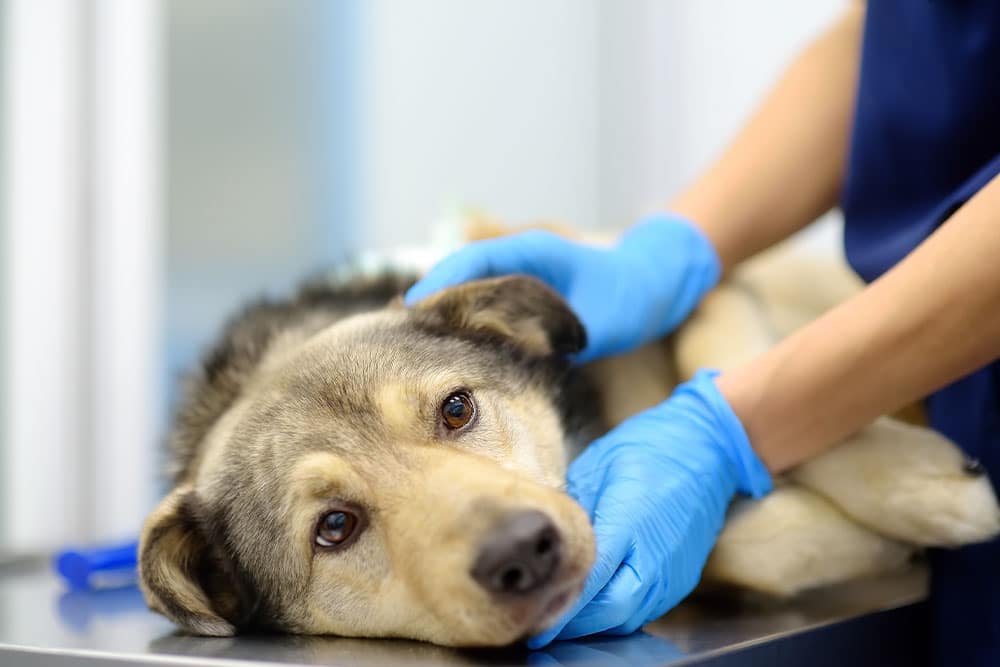
It often happens during an ordinary moment, running a hand along your dog’s neck during a good scratch session or noticing a small firm lump under the jaw while holding your cat. Enlarged lymph nodes are one of those findings that can mean something relatively minor, like a local infection the body is actively fighting, or something that requires much closer investigation. The tricky part is that it is nearly impossible to tell which category a lump falls into without a professional assessment, and the sooner that assessment happens, the more useful the information available for next steps.
Bayview Animal Hospital is a locally owned practice in Saint Petersburg, FL, with a commitment to thorough exams and sophisticated diagnostics for dogs and cats. Our veterinary services include the in-house testing and reference lab capabilities needed to evaluate lymph node abnormalities with accuracy and care. Contact us to schedule an evaluation, because finding something and getting it checked is always the right call.
What Do Lymph Nodes Actually Do?
Before getting into what can go wrong, it helps to understand what lymph nodes are supposed to do. They are small, bean-shaped structures distributed throughout the body that serve as critical checkpoints for the immune system. Lymph fluid, which collects from tissues throughout the body, passes through these nodes where immune cells screen it for bacteria, viruses, cancer cells, and other threats. When a threat is detected, the lymph node responds by ramping up immune activity, which often causes it to swell.
Knowing where lymph nodes are located in dogs helps owners know what they’re feeling during routine petting. A helpful lymph node locations chart can orient owners to the most commonly palpable spots: under the jaw (mandibular), in front of the shoulders (prescapular), in the armpit (axillary), in the groin (inguinal), and behind the knee (popliteal). In cats, lymph nodes follow a similar distribution, though they are often harder to feel because of smaller baseline size.
Healthy lymph nodes are generally small and soft. A node that has grown noticeably, feels firmer than expected, or has become easier to locate during petting is worth bringing to our attention. Regular wellness care visits include lymph node palpation as a routine part of the physical exam, which is one of the many reasons these appointments matter even when a pet seems completely fine.
What Causes Lymph Nodes to Enlarge?
The medical term for enlarged lymph nodes is lymphadenopathy, and it is a clinical sign, not a disease in itself. Something is driving the response, and identifying what that something is determines how treatment proceeds and what the outlook looks like. The causes fall into a few broad categories.
Infections and Inflammation: Frequent and Often Treatable
The most common reason for swollen lymph nodes is that the immune system is responding to an infection somewhere in the body. Bacterial, viral, fungal, and parasitic infections can all trigger this response. When the source is localized, such as a tooth root abscess, a skin wound, or an ear infection, the lymph nodes nearest that area tend to enlarge. When the infection is systemic, multiple lymph node groups may be affected at once.
- In coastal Florida, tick-borne diseases are worth keeping in mind. Lyme disease can cause lymph node swelling alongside joint pain and lethargy.
- Leptospirosis, spread through contact with water or soil contaminated by infected urine, can also affect lymph nodes as part of a broader systemic response.
- Fungal disease is another consideration in warmer, humid regions. Species like Cryptococcus can cause lymph node swelling along with respiratory or neurological signs, and blastomycosis, while more common in other parts of the country, can occasionally appear in Florida pets with the right environmental exposure.
How Can You Prevent Lymph Node Enlargement From Infections?
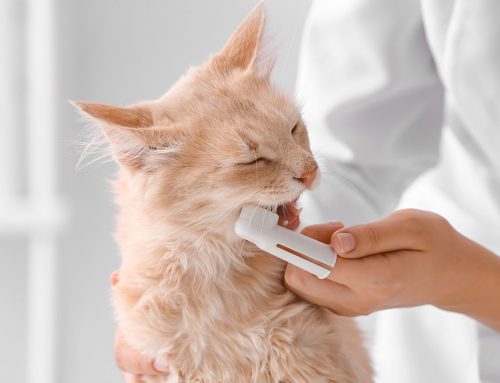
Dental disease is a particularly common and underappreciated cause of regional lymph node enlargement. A dog or cat with advanced periodontal disease or a tooth root abscess may have noticeably swollen mandibular nodes under the jaw. This is one of several reasons routine veterinary dental care matters beyond oral health alone. We carry dog dental products and cat dental products in our pharmacy to help owners stay ahead of dental disease between professional cleanings.
For dogs and cats with outdoor access in Florida, keeping up with vaccinations and using year-round flea and tick prevention are some of the simplest things owners can do to reduce infection-related lymph node risks. We carry flea and tick prevention for dogs and for cats and can help you choose the right product.
When Cancer Is the Cause
This is the part of the conversation that most pet owners dread, but it’s worth addressing clearly and honestly. Lymphoma is the most common cancer affecting lymph nodes in both dogs and cats, and it originates in lymphocytes, the white blood cells that are produced in lymph nodes and circulate throughout the lymphatic system. Lymphoma in pets in its various presentations helps owners recognize when the pattern of what they’re feeling warrants urgency.
- Canine lymphoma most frequently presents as the multicentric form, where multiple peripheral lymph node groups enlarge simultaneously, often symmetrically, and typically without pain. A dog whose jaw, shoulder, and knee lymph nodes are all noticeably swollen at the same time is presenting a pattern that warrants prompt evaluation. Other forms include alimentary lymphoma affecting the gastrointestinal tract, mediastinal lymphoma affecting the chest, and extranodal forms affecting sites like the skin or eyes.
- In cats, feline lymphoma is the most commonly diagnosed cancer overall, though it most frequently affects the gastrointestinal tract rather than the peripheral lymph nodes. This is part of why cats can sometimes hide the signs of lymphoma longer than dogs. Peripheral lymph node enlargement in cats still warrants evaluation, but the clinical picture is often more nuanced.
Enlarged lymph nodes can also result from metastatic spread of cancers that originated elsewhere. A mast cell tumor on the skin, for example, may cause regional lymph node swelling as cancer cells travel into the lymphatic system.
Other Causes Worth Knowing
Not every case falls neatly into infection or cancer. Lymphedema, a condition where fluid accumulates due to lymphatic obstruction or dysfunction, can cause limb swelling and regional node changes. Immune-mediated conditions, allergic reactions, and drug hypersensitivity can also cause lymph node enlargement as part of a broader immune response. These cases require the same diagnostic rigor as any other presentation, because the underlying mechanism shapes the treatment.
How Are Enlarged Lymph Nodes Diagnosed?
Determining what is driving lymphadenopathy requires a systematic approach, and the starting point is always a thorough physical examination paired with a detailed history.
What the Physical Exam Reveals
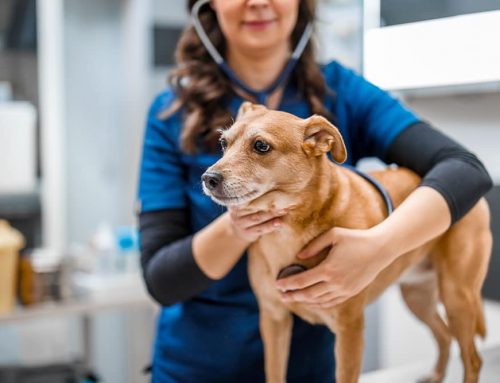
When we examine a pet with enlarged lymph nodes, we’re evaluating several characteristics at once: size, texture, symmetry, whether the nodes are movable or fixed to surrounding tissue, and whether they seem painful to the touch. These qualities, combined with the pattern of enlargement, provide important early clues. A single enlarged node near a wound points in a different direction than multiple firm, painless, symmetrically enlarged nodes throughout the body.
We also look for accompanying signs: fever, unexplained weight loss, changes in energy or appetite, skin lesions, oral disease, or respiratory changes. All of these contribute to the clinical picture and help narrow the list of possible causes before any additional testing is ordered.
Cytology, Biopsy, and What Each Tells Us
When physical examination suggests the lymph nodes need further investigation, the next step is typically a fine-needle aspiration (FNA), a minimally invasive procedure where a small needle is used to collect cells from the node for microscopic examination. FNA cytology is quick, requires no sedation in most cases, and can be performed during the same appointment. It provides cellular-level information that can confirm infection, identify cancer cells, or point toward an immune-mediated process.
The choice between cytology vs biopsy depends on what cytology shows and what additional information is needed. When cytology results are inconclusive, or when a more detailed architectural view of the tissue is required, a biopsy provides a larger sample that can be processed for histopathology. For lymphoma specifically, additional testing such as flow cytometry, immunophenotyping, or a PARR test (PCR for antigen receptor rearrangement) may be recommended to characterize the subtype, which matters for treatment planning and prognosis.
Staging tests help determine how far the disease has spread and whether other organs are involved. These typically include bloodwork, urinalysis, imaging with radiographs and ultrasound, and sometimes bone marrow evaluation. Our in-house diagnostic capabilities handle much of this workup, with our reference laboratory covering specialized panels when indicated.
What Are the Treatment Options?
Treatment is entirely dependent on what caused the lymph nodes to enlarge, which is why getting the diagnosis right is the foundation of everything that follows.
- For infections and inflammatory causes: Targeted treatment with appropriate antibiotics, antifungal medications, anti-inflammatories, or supportive care typically resolves both the underlying problem and the lymph node swelling. For tick-borne diseases, a course of appropriate antimicrobials is usually highly effective, particularly when caught early. Dental disease causing regional lymph node swelling often resolves after the dental source is addressed through a professional cleaning or extraction.
- For lymphoma: Multi-agent chemotherapy protocols are the standard of care for most dogs with multicentric lymphoma, and they are generally well tolerated. Many dogs achieve remission, often for a year or more, and quality of life during treatment is typically good. For cats with gastrointestinal lymphoma, the treatment approach depends heavily on the subtype. Small-cell lymphoma in cats often responds well to oral medications and can be managed for extended periods. Large-cell lymphoma is more aggressive and requires a more intensive approach.
It’s worth being clear that remission is not the same as cure. Monitoring and re-evaluation are ongoing parts of the plan. If relapse occurs, rescue protocols and palliative options are available to maintain comfort and quality of life.
For cases where pursuing active treatment is not the right path for the pet or family, compassionate palliative care focused on comfort and quality time together is always a valid and respected choice. We support families through every decision without judgment.
Monitoring: Before, During, and After Treatment
Whether a pet is being treated for infection, managing lymphoma, or recovering from a procedure, regular rechecks are how we make sure things are moving in the right direction. Treatment response, potential side effects, and any signs of relapse or new lymph node changes all require ongoing attention.
For owners, learning to gently check familiar lymph nodes at home between appointments is genuinely useful. You don’t need to become an expert, but knowing roughly how large a node was after the last visit and noticing if it seems different gives us information that helps us act sooner rather than later. Open communication with our team, whether for a reassuring confirmation or a “something feels different” phone call, is always encouraged.
We also provide straightforward guidance on quality of life and what to watch for, because navigating a chronic or serious diagnosis is easier when owners know what changes to expect and when to call.
FAQs About Enlarged Lymph Nodes in Pets
Are enlarged lymph nodes always a sign of cancer?
No. Infection is the most common cause of enlarged lymph nodes, and most of those cases are treatable and resolve fully. Dental disease, skin infections, tick-borne illness, and fungal infections can all cause lymph node swelling. Cancer is an important consideration and should be ruled out through diagnostics, but it is not the automatic explanation.
Can I tell at home whether a swollen lymph node is serious?
Not reliably. The size, texture, and location of a swollen node provide some clues, but distinguishing infection from cancer or other causes requires microscopic evaluation. A node that has grown quickly, feels very firm, or is part of a pattern of multiple enlarged nodes throughout the body warrants prompt evaluation.
What does fine-needle aspiration involve?
FNA is a quick, minimally invasive procedure that most pets tolerate without sedation. A small needle collects a sample of cells from the lymph node, which are then examined under a microscope. It’s typically the first step in investigating a suspicious lymph node and can provide a diagnosis on the same day or within a few days when sent to our reference laboratory.
How long does treatment for lymphoma take?
Multi-agent chemotherapy protocols for dogs typically run for several months, with visits scheduled weekly or every few weeks depending on the protocol. Many dogs maintain a good quality of life throughout. For cats with small-cell lymphoma, oral medication can be managed at home with periodic rechecks. The timeline and intensity of treatment depend on the lymphoma type and the pet’s overall health.
What should I do if I feel a lump on my pet?
Schedule an appointment rather than waiting to see if it resolves. Many lumps turn out to be benign or easily treated, and identifying them early provides more options regardless of what the cause turns out to be.
Finding a Lump Doesn’t Have to Mean the Worst
The worry that comes with noticing something new on a pet is completely understandable. Most people’s minds go immediately to the worst possibility, and then they spend several days deciding whether to call. Our advice is to call. An examination provides information that monitoring from home simply cannot, and more options are always available when something is caught earlier rather than later.
At Bayview Animal Hospital, we take the promise of thorough, compassionate care seriously. From the initial exam and in-house diagnostics through reference lab testing, treatment planning, and ongoing monitoring, we’re here to give your pet the kind of care we’d want for our own. Request an appointment or contact us at 727-477-1442 to get started. We’re ready to help you get answers.