

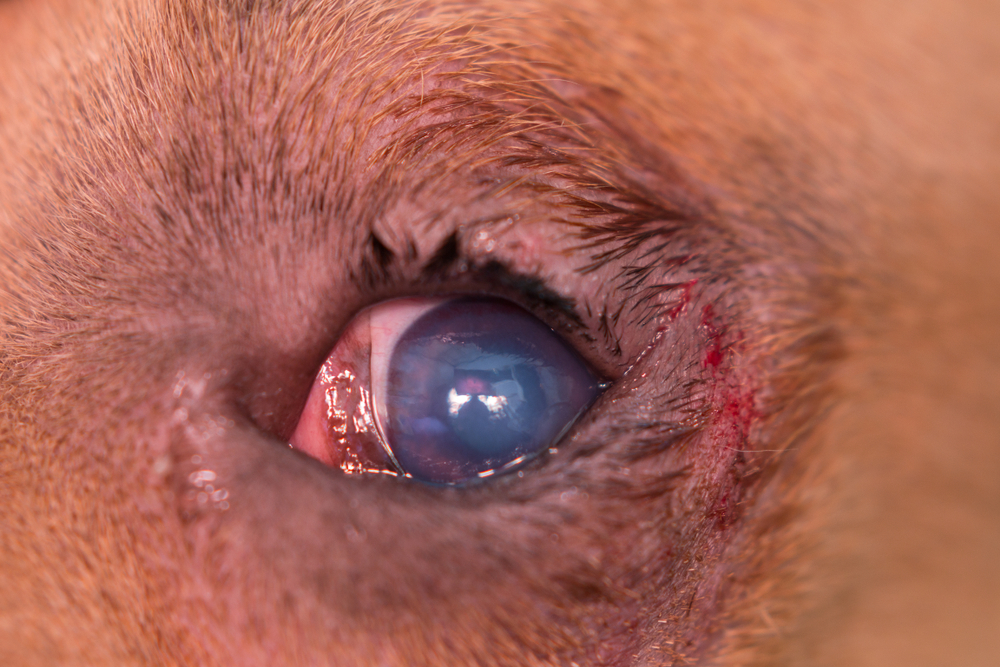
Squinting with one eye half-closed is usually a sign of eye pain, and pinning down the cause of that pain is the most important next step. Squinting can be a sign of entropion, where the eyelid rolls inward so that lashes or skin rub directly (and painfully) against the surface of the eye. Ectropion is the opposite issue, with the lid drooping outward and leaving delicate inner tissue exposed and prone to dryness and infection. Both can look like mild eye redness or discharge at first, and when they go unaddressed, either one can lead to chronic corneal discomfort and damage that is harder to treat down the line. Early evaluation is what tells them apart and prevents permanent damage.
When you’re worried about your pet’s eyes, the comprehensive veterinary services at Bayview Animal Hospital in St. Petersburg are here to help. We handle eyelid evaluations and surgical correction when surgery is the right answer. The goal is simple: put the eyelid back where it belongs so it protects the eye instead of irritating it. Most pets are visibly more comfortable soon after. If your dog or cat has been squinting, tearing, or pawing at an eye, schedule an appointment and we will take a careful look.
The Bottom Line on Entropion and Ectropion
- Both need evaluation, not waiting: entropion (lid rolling in) and ectropion (lid drooping out) cause chronic eye irritation.
- Either can damage the cornea over time: pain relief and surgical correction restore comfort and protect vision.
- Genetics play a big role: some breeds are prone to one or both, and cats can develop entropion too, usually later in life.
- A simple in-exam test helps: a topical anesthetic often separates a structural eyelid problem from pain-induced squinting.
What Are Entropion and Ectropion?
Entropion is when an eyelid, most often the lower lid, rolls inward, so the lashes and skin surface rub against the cornea with every blink. That constant friction causes pain and tearing, and over time it can lead to corneal ulcers, scarring, and even vision loss. Some pets are born with the conformation; others develop it later because of facial-tissue changes, weight loss, or chronic squinting that pulls the lid inward.
Ectropion is the opposite: the lower lid sags outward, exposing the pink inner conjunctiva and the corner of the eye. Without the lid working like a windshield wiper, the eye dries out, debris collects in the exposed tissue, and infections become a recurring problem. Some breeds are bred for the look, since the droopy eye in Bloodhounds and Saint Bernards is anatomic ectropion, while other dogs develop it from age-related tissue changes.
| Feature | Entropion | Ectropion |
| Lid direction | Rolls inward | Droops outward |
| The problem | Lashes and skin rub the cornea | Inner tissue left exposed |
| Main risk | Corneal ulcers and scarring | Dryness and recurrent infection |
Accurate diagnosis means looking at lid position, tear production, and corneal health together, and multiple eyelid disorders can overlap in the same pet. Our in-house diagnostic testing supports the workup that a thorough eye exam needs.
Which Breeds Are Most at Risk?
Genetics and facial structure play a big role in eyelid abnormalities. The breeds most prone to entropion include:
- Brachycephalic breeds: Bulldogs, Pugs, Boxers, and others with short faces.
- Heavy-folded breeds: Shar-Peis, Chow Chows, and dogs with deep facial folds.
- Retrievers: especially Golden Retrievers and Labradors.
- Large loose-skinned breeds: Rottweilers, Mastiffs, and similar dogs.
- Spaniels: Cocker Spaniels and several related breeds.
Breeds most prone to ectropion include Bloodhounds, Saint Bernards, Basset Hounds, Newfoundlands, and others with naturally loose lower lids. Some dogs, Bulldogs especially, develop both hereditary eyelid conditions at once, with entropion in the upper lid and ectropion in the lower. Beyond breed, contributors include age-related tissue relaxation, chronic inflammation or infection, previous eye trauma, scarring from past surgery, and pain-induced squinting that retrains the lid position over time. Breed-specific concerns are something we discuss at every wellness exam so you know what to watch for.
What Are the Signs, and What Happens If You Wait?
The signs of eye pain in pets are easy to miss because pets rarely complain, and tearing or eye discharge is often the first thing your family notices. Squinting and excessive blinking, redness, pawing at the eye, and an elevated third eyelid are also common signs of eye pain.
Left untreated, entropion typically causes painful corneal ulcers, scarring, pigment changes, and over time vision impairment. Ectropion causes chronic irritation, recurrent bacterial conjunctivitis, and dry eye from incomplete lid closure. In both cases, the longer the underlying problem goes unaddressed, the more complicated the eventual surgical correction becomes. If your pet is showing any of these signs, reach out to us sooner rather than later.
How Do We Diagnose an Eyelid Problem?
A thorough eye exam evaluates several things at once:
- Lid position: at rest and during blinking, including whether the lid margin contacts the cornea.
- Tear production: often using a Schirmer tear test.
- Corneal surface: checking for ulcers, scarring, or pigment changes, usually with a fluorescein stain.
- Lash anatomy: including misdirected lashes or distichiasis, a related eyelash problem.
- Intraocular pressure: measured when it is relevant to the picture.
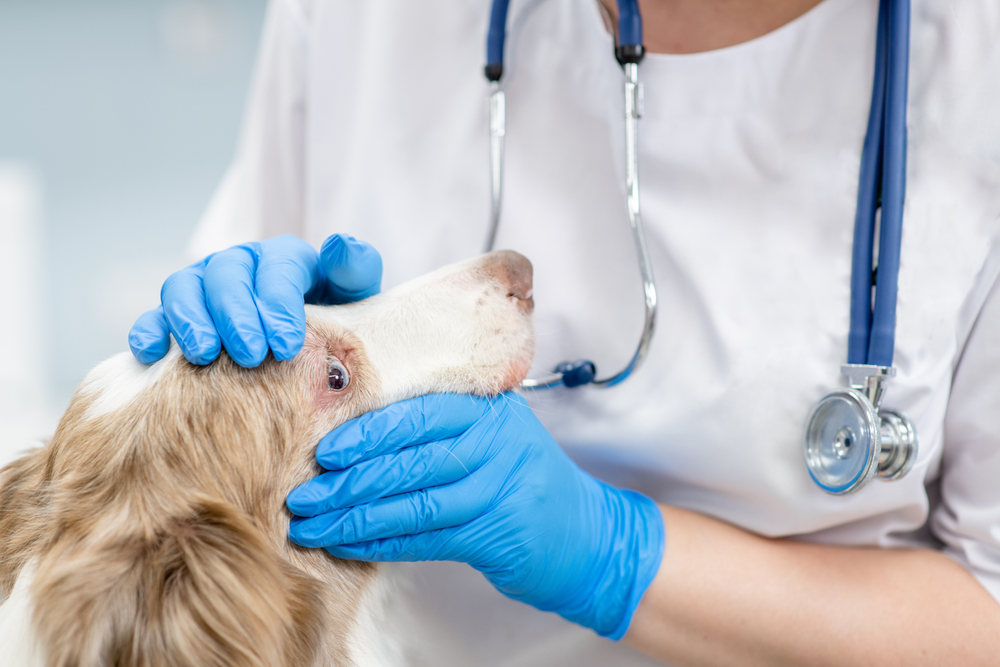
Topical anesthetic is one of the most useful tools we have for sorting this out. If a pet is squinting because of pain, such as a corneal ulcer or an intraocular issue, the squint relaxes once the anesthetic numbs the surface, and the true lid position becomes visible. If the lid is truly rolled inward, it stays that way whether the eye hurts or not. If you have been watching your pet squint and want answers, schedule an eye exam and we will start the workup.
What Are the Treatment Options?
Not every case requires immediate surgery. The right approach depends on your pet’s age, the severity, and whether the problem is structural or pain-driven.
Temporary or Short-Term Measures
A procedure called temporary eyelid tacking uses small sutures to hold the lid in a more normal position without permanent tissue removal. It is the right approach for:
- Growing puppies: whose facial structure has not finished developing.
- Pain-driven squinting: where a corneal ulcer is distorting lid position.
- Cases that need reassessment: relieving the friction and looking again once everything settles.
Tacking can be repeated, and permanent correction can be considered once anatomy stabilizes.
Permanent Surgical Repair
Eyelid surgery is appropriate when a problem is clearly structural and your pet has finished growing. The specific technique depends on the condition, species, breed, and individual anatomy. A conservative surgical approach is preferred, since it is much easier to remove a little more tissue at a recheck than to fix overcorrection. Customized anesthesia and continuous monitoring keep pets safe and comfortable from start to finish.
Is Entropion Different in Cats?
Cats often show up a little differently than dogs. Feline entropion tends to appear later in life and often shows up alongside other surface eye problems, such as chronic conjunctivitis or herpes-related corneal disease. Cats sometimes need a combination of surgical techniques tailored to their specific situation, and underlying viral disease may need to be addressed at the same time.
What Happens on Surgery Day?
Knowing what to expect on the day takes a lot of the worry off:
- Pre-surgical confirmation: we confirm the surgical plan, review the chart, and answer any last questions.
- Pre-anesthetic exam and bloodwork: a focused exam confirms your pet is stable for anesthesia, with bloodwork reviewed.
- Customized anesthesia: protocols are tailored to your pet’s species, breed, age, and any health considerations.
- Continuous monitoring during surgery: heart rate, oxygen saturation, blood pressure, respiratory rate, and temperature are tracked the entire time.
- Pain management: multimodal pain control before, during, and after the procedure.
- Recovery in a quiet area: your pet wakes up monitored, with warm bedding and gentle handling.
- Discharge with written instructions: medication schedules, recheck timing, what to watch for, and how to reach us.
What Does Recovery Look Like?
Most pets are visibly more comfortable within the first few days, even while some surgical swelling is still around.
The First Few Days
Normal recovery signs:
- Mild swelling: some puffiness around the eye.
- A little bruising: a small amount near the surgical site.
- Slight discharge: pinkish tearing for a day or two.
- Lower energy: quieter behavior for 24 to 48 hours.
Concerning signs that warrant a call:
- Worsening swelling: that increases after the first day.
- Yellow or green discharge: a possible sign of infection.
- Active bleeding: more than a few drops.
- Rubbing despite the cone: which can dislodge sutures.
- Sudden severe squinting: or holding the eye tightly closed.
The Elizabethan collar is non-negotiable until rechecks confirm everything is healing, since even a single hard rub can dislodge sutures or damage the surgical site. We will walk you through administering eye medications and give you tips for making it easier on both of you.
Healing Timeline and Follow-Up
A general timeline:
- Days 0 to 3: swelling peaks and pain medication matters most.
- Days 3 to 7: swelling starts to subside while sutures stay intact.
- Days 10 to 14: suture-removal recheck, and lid position is reassessed.
- Two to four weeks: final lid position settles and we confirm the result.
- Months out: a long-term check at the next wellness visit.
A small revision is occasionally needed, especially in growing pets or in cases where we deliberately undercorrected so we didn’t go too far. That is expected, not a failure.
What Are the Surgical Outcomes?
Eyelid surgery tends to do well when it is done thoughtfully and followed by careful home care. Most pets experience meaningful pain relief soon after surgery and avoid further corneal damage. Factors that affect outcomes:
- Original severity: how far the eyelid was malpositioned to begin with.
- Eye health at surgery: existing corneal scarring may not completely resolve.
- Facial maturity: growing pets may need a follow-up procedure.
- Home care quality: cone compliance during recovery makes a real difference.
For show dog families, a note: some breed registries have rules about cosmetic eye surgery, so it is worth checking your registry’s stance before scheduling if conformation showing is on the table. If you are not sure how that applies to your dog, talk with our team and we can think it through together.
Frequently Asked Questions About Eyelid Surgery
Can Entropion Go Away on Its Own?
In growing puppies, mild entropion sometimes resolves as the head and face finish maturing, and temporary tacking holds the lid in a normal position during that time. In adult dogs and cats, structural entropion does not resolve on its own and tends to worsen as ongoing friction changes the lid anatomy further.
How Soon After Surgery Will My Pet Be Comfortable?
Most pets are visibly more comfortable within three to five days, even with some surgical swelling still present. The friction that was causing pain is removed immediately, and what remains is healing discomfort that fades steadily over the first two weeks.
Will My Pet Need Surgery on Both Eyes?
Often yes, when both eyes are affected, but not always at the same time. We typically address one eye at a time so the other stays comfortable during recovery, with the second eye usually scheduled a few weeks later once the first is healing well.
When Squinting Becomes a Question to Answer
Persistent squinting is your pet’s way of telling you something hurts, and an eyelid problem is one of the most common reasons. Catching entropion or ectropion early means a simpler correction and less corneal damage to undo, and we are here to walk you through every part of that decision with care. If your dog or cat has been squinting, tearing, or pawing at an eye, schedule a visit and we will figure out what is going on together.




Leave A Comment