

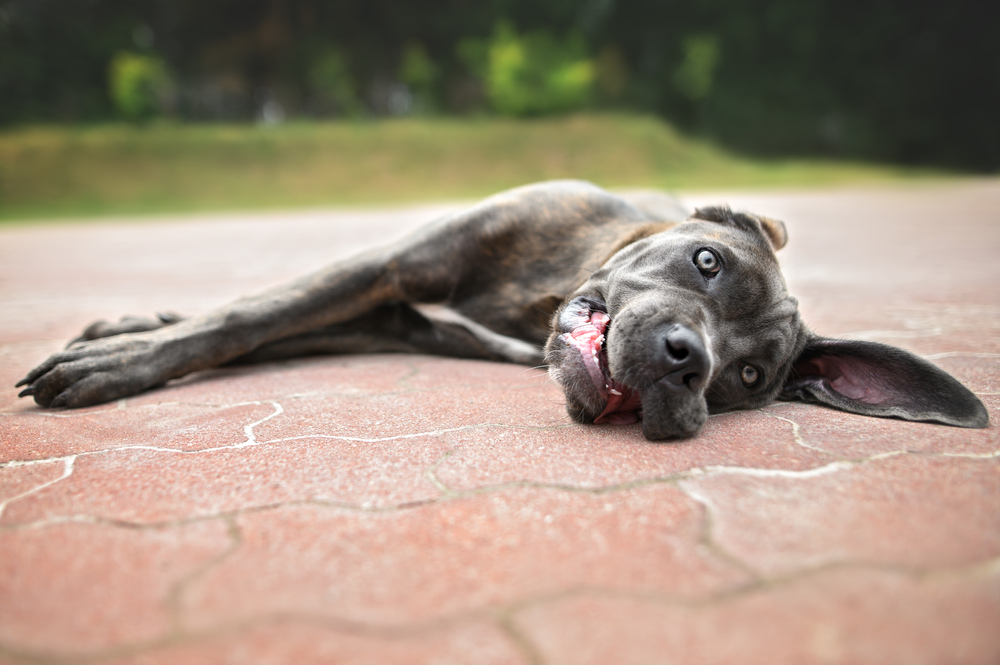
Florida humidity becomes a heat stroke risk the moment the air gets too damp for your pet to cool themselves, which can happen at temperatures that do not feel dangerous to you. Dogs and cats shed heat by panting, and panting works by evaporation, so when the air is already saturated with moisture, that cooling system stalls. The result is that a humid 85-degree St. Petersburg afternoon can put a dog in real danger while the thermometer looks harmless, which is exactly why humidity deserves as much attention as temperature.
Bayview Animal Hospital cares for pets through the long, muggy Gulf Coast summer, and we see how often the danger sneaks up on a humid day rather than a record-hot one. Our veterinary services include the diagnostics to assess an overheated pet quickly. If your dog or cat has overheated, or you want to understand your pet’s heat risk before a problem starts, contact us and we will help.
Humidity and Heat: What Florida Pet Families Should Know
- Pets cool by evaporation through panting, and high humidity stalls that process, so muggy days are riskier than the temperature alone suggests.
- A humid day in the mid-80s can be as dangerous as a much hotter, drier day elsewhere.
- Cool (never iced) water plus strong airflow is the safe way to cool; ice traps heat in the core.
- A pet who recovers after overheating can still develop kidney, liver, or clotting trouble over the next 24 to 72 hours.
Why Does Humidity Make Heat So Much More Dangerous?
To understand the risk, it helps to know how a dog actually cools off. People sweat across their whole skin, and as that sweat evaporates it carries heat away. Dogs and cats cannot do this; they rely almost entirely on panting, which moves air across the wet surfaces of the mouth, tongue, and upper airway so that moisture evaporates and pulls heat out with it. A little extra cooling happens through the paw pads, but panting does the heavy lifting.
Evaporation is the key word, and it is where humidity changes everything. Evaporation only works when the surrounding air has room to absorb more moisture. On a dry day, panting sheds heat efficiently because the air readily takes up the evaporating water. On a humid day, the air is already close to saturated, so far less moisture can evaporate, and the panting that should be cooling your dog simply cannot keep up. The dog pants harder and harder while their core temperature keeps climbing.
That is why the heat index, which combines temperature and humidity, matters more for pets than the temperature reading by itself. In Florida, where summer dew points stay high for months, the gap between what the thermometer says and what your dog actually experiences can be the difference between a safe walk and an emergency.
What Counts as Dangerous Humidity for a Dog?
There is no single magic number, because the danger comes from temperature and humidity together. As a rough guide for most healthy dogs, the table below shows how humidity pushes a manageable temperature into risky territory.
| Air temperature | With high humidity it feels like | Risk for most dogs |
| 80°F | 85 to 90°F | Moderate; shorten and time activity |
| 85°F | 95 to 100°F | High; early morning or after dark only |
| 90°F and up | 105°F or more | Very high; keep activity indoors |
Some pets reach the danger zone a full step earlier. Flat-faced breeds, whose airway anatomy already limits panting and whose risk climbs with extra weight, along with heavy-coated dogs, seniors, and pets with heart or airway disease, should be treated as if conditions are one row more severe than they are.
What Are the Signs Your Dog Is in Trouble?
On a humid day, the first sign is usually panting that grows heavier and never quite settles, even in the shade. From there, watch for a dog who seeks out cool tile, slows down, or seems unusually tired. These early signals from heat stroke in pets are your cue to stop and cool.
If it progresses, the drool turns thick and ropy, the gums redden, and the dog becomes restless, weak, or unsteady, sometimes with vomiting. At the dangerous end, gums go pale, gray, or purple, and a dog may collapse, grow disoriented, or have a seizure, which is a true emergency. Cats hide heat distress especially well, so a cat breathing with an open mouth, lying flat, or hiding somewhere cool needs help right away, because open-mouth breathing in a cat is never normal.
What Should You Do if Your Dog Overheats?
Cooling matters even more thoughtfully on a humid day, because the same saturated air that overheated your dog also makes evaporative cooling slower, so airflow and getting indoors do real work. Follow these steps for cooling:
- Get indoors to air conditioning if at all possible, since AC removes humidity as well as heat.
- Wet the neck, belly, groin, and paws with cool tap water, not ice.
- Run a strong fan on the damp areas, because airflow is what drives the evaporation humidity is fighting.
- Offer small sips to an alert pet, never forcing water.
- Keep ice and ice baths away, since they constrict surface vessels and trap heat.
- Call us and drive in with the AC running, easing off cooling near 103 degrees if you’re able to check their temperature.
The home steps are meant to start the cooling, not finish the job, which happens with us. Cooling too quickly, or too much, is also a risk, so start the process on the way to the vet but don’t try to manage it all at home. The dangers of heatstroke happen after cooling begins and last several days.
Why Does a Pet Still Need the Vet After Cooling?
Even a pet who seems restored needs to be seen, because heat stroke does its worst damage internally and on a delay. Heat stroke treatment combines steady cooling, IV fluids to protect circulation and the organs, and careful watch for complications, with the first day the most precarious. The outward picture simply does not reveal what is happening inside.
The delayed complications are why a check is worth it: the kidneys can falter over two or three days, the liver can show strain on bloodwork, the gut lining can break down into bloody vomiting or diarrhea, the clotting system can spiral into DIC where the body clots and bleeds at once, and the brain can swell with neurologic signs surfacing after an apparent recovery. Same-day bloodwork catches these while they are still manageable.
How Do You Protect a Pet on Humid Days?
The trick in Florida is to plan around the humidity, not just the forecast high. A few heat safety habits carry most of the load: check the heat index rather than the temperature alone, keep water in several spots, and give pets cool tile or a mat to rest on with the AC running through the muggiest hours. Wetting your pet down with cool water (not ice) before outdoor time can also help. Frozen treats, like a rubber Kong toy with frozen water or canned food, make great entertainment on hot days. Outdoors, preventing heat stroke means walking at the cool ends of the day, checking pavement temperature before walking, and cutting things short when your dog pants hard or lags. Never leave a pet in a parked car, where the interior turns deadly within minutes; hot vehicles take pets’ lives every summer even with the windows cracked.
The whole household needs the plan. For outdoor cat safety, keep shaded water refreshed twice daily and offer cool retreats, and treat open-mouth breathing in a cat as an emergency. Indoors, run the AC or fans to move and dry the air, and head off restlessness with boredom busters and DIY enrichment toys that keep a pet busy without heating them up.
Frequently Asked Questions About Pet Heat Stroke
What Humidity Level Is Dangerous for Dogs?
There is no single cutoff, because humidity and temperature work together. As a rule of thumb, once the humidity is high, even a temperature in the low to mid 80s should be treated as risky, and the heat index is a better guide than the thermometer. On very humid days, assume your dog can cool themselves far less effectively than usual and keep activity short and early.
My Dog Was Hot but Seems Fine Now. Do I Still Need to Come In?
If your dog was genuinely overheated, come in even though they look recovered. Heat stroke’s organ and clotting damage can take a day or two to surface, and a dog who seems normal can still be carrying it. A same-day exam and bloodwork settle the question and catch any trouble early, while it is most treatable.
Are Some Breeds Always at Higher Heat Risk?
Several are. Flat-faced breeds, heavy-coated dogs, seniors, overweight pets, and those with heart or airway disease run a higher baseline risk, and in humid Florida that holds true on far more days of the year than people expect. If your pet is in one of those groups, treat muggy days with extra caution rather than waiting for a heat advisory.
Does a Fan Actually Help on a Humid Day?
A fan helps more than you might think, because moving air speeds the evaporation that humidity is slowing down. On its own a fan will not rescue a dog in serious trouble, but paired with cool water on the skin and a move indoors, airflow is one of the most useful tools you have while you get to us. Air conditioning is even better, since it lowers humidity as well as temperature.

A Florida-Smart Summer for Your Pet
In a climate this humid, staying safe means watching the dew point as closely as the temperature, planning activity for the cool hours, and acting early when panting will not settle. Cool the right way if your pet overheats, lean on airflow and AC, and come in even when they seem to bounce back.
If you want help judging your pet’s heat risk, or your dog or cat has overheated, contact us and we will get you in. Our veterinary services cover the diagnostics needed for an overheated pet, so we can move quickly when minutes matter.




Leave A Comment