

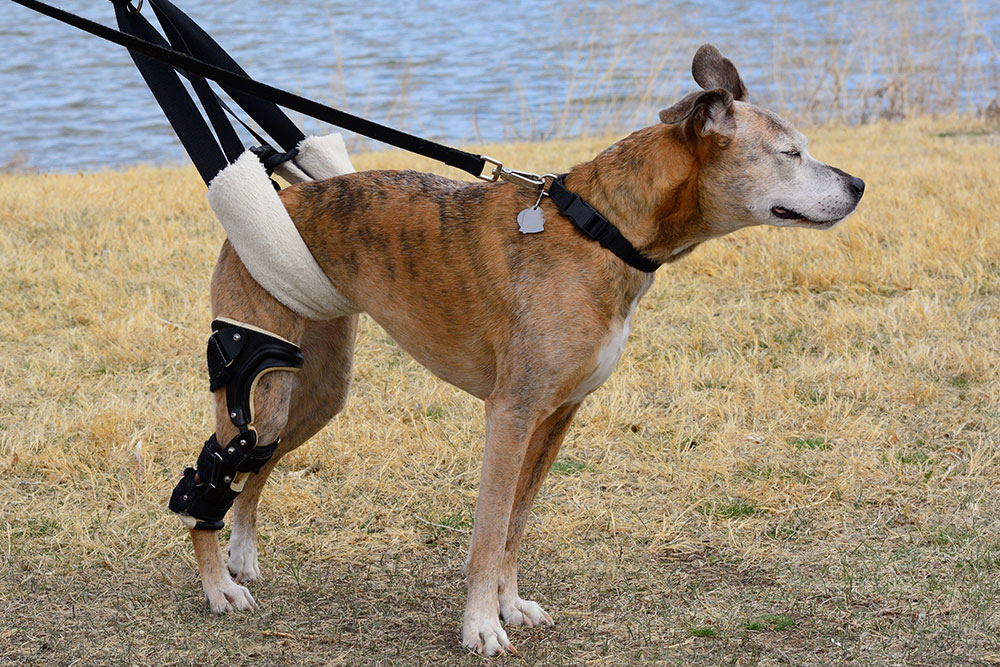
Most dogs go on to live comfortable, active lives after a torn cruciate ligament, though the knee itself is permanently changed. The cranial cruciate ligament stabilizes the knee the way an ACL does in people, and once it gives way, arthritis forms in that joint whether or not it is repaired. Surgical stabilization offers the most reliable return to normal function, especially for medium and large breeds, while some small or less active patients do well with other approaches. Long-term comfort comes down to managing that arthritis for life and protecting the opposite knee, which 40 to 60 percent of dogs will eventually injure as well. Weight, conditioning, and consistent follow-up care are the parts of the outlook you control.
Bayview Animal Hospital in Saint Petersburg treats a cruciate injury as a long-term joint problem rather than a single bad week. We start with a hands-on orthopedic exam and digital X-rays taken here in the hospital, which show how much arthritis has already built up, then talk through the treatment path that fits your dog’s size and activity level. Our veterinary services also include laser therapy and the arthritis and mobility support aging pets need, which help a repaired knee stay comfortable and keep the muscle around both back legs strong. If your dog is favoring a back leg or you are weighing what comes next after a cruciate repair, reach out to us and we will take a careful look.
What a Torn Cruciate Really Means
- Most cruciate ligaments fray slowly over months, so the backyard sprint that finally tore it was the last straw rather than the whole story.
- A few quiet days can settle the limp, but the knee stays loose underneath, and joint damage keeps building the whole time.
- Surgery gives most medium and large dogs the most dependable result, while some small, low-key dogs do well with a carefully managed non-surgical plan.
- What you do at home with weight, footing, and conditioning shapes that knee for the next decade more than any single decision made in week one.
What Are the First Signs of a Torn ACL in a Dog?
The first sign is usually sudden hind-limb limping that eases over a few quiet days and then returns the second the fun starts again, which is the classic pattern of a partial tear.
A complete tear tends to be louder. Your dog yelps, comes up on three legs, and won’t put the foot down at all. Partial tears are quieter and easier to talk yourself out of, so the small stuff is worth watching across a week rather than waiting for a dramatic three-legged hop.
- The sit test: dogs with a sore stifle swing the painful leg out to the side instead of tucking it neatly under the hip.
- Toe touching: the toes rest on the ground for balance while the real weight goes everywhere else.
- Everyday moves get harder: stairs, hopping into the car, and standing up off a tile floor all take a beat longer.
- A thicker knee: run both hands down each stifle and compare, since swelling on the inside of the joint is often easy to feel.
- Stiffness after big days: the morning after a long walk or a beach trip looks rougher than the day before.
Never give human pain relievers like ibuprofen, naproxen, or acetaminophen to a limping dog. They cause stomach ulcers and kidney or liver injury in dogs, and they rule out safer medications for days afterward. If the limp has hung around more than a couple of days, or keeps coming back, have that leg looked at before your dog trains themselves into a new way of walking.
Why Do Cruciate Ligaments Tear During Something as Ordinary as Hopping Off the Couch?
A cruciate ligament injury in dogs is usually the end of a slow fraying process rather than one bad landing, so the ligament had been giving way in strands for months before the day you noticed.
Inside the stifle, that ligament has one job: keeping the tibia from sliding forward out from under the femur every time the leg takes weight. Once it fails, the shin bone shifts with each step, and the joint works like a hinge with a stripped pin.
- Breed and build: Labradors, Rottweilers, Newfoundlands, Golden Retrievers, and Staffordshire Terriers tear at noticeably higher rates.
- A steep tibial plateau: the top of the shin bone slopes backward, and the steeper that angle, the harder the ligament works on every stride.
- Body weight: extra pounds add load to a ligament that is already fraying quietly.
- Weekend-warrior patterns: the dog who naps on the tile all week, then sprints flat out on Saturday, asks a lot of unconditioned tissue.
The other knee has been carrying the same genetics and strain, and now it carries extra load too, increasing the risk of ligament rupture. That second knee is why we keep an eye on body condition at wellness visits long after the first leg is fixed. Trimming a dog down is slow work, and it’s far easier to start before the limp shows up on the other side.
How Do We Tell a Cruciate Tear From Everything Else That Makes a Dog Limp?
Diagnosis starts with hands, not machines. We feel for cranial drawer and tibial thrust, two tests that show whether the shin bone slides forward when it shouldn’t, and we check the joint for swelling, thickening, and the pain that comes with a torn meniscus. Imaging fills in the rest.
- The orthopedic exam: a tense dog can splint the knee hard enough to hide the motion, so light sedation usually gives us the honest answer. It’s also where the look-alikes surface, especially a kneecap slipping out of its groove, which limps a lot like a cruciate tear in small breeds.
- Radiographs: X-ray imaging won’t show the ligament itself, but it does reveal fluid in the joint, early arthritic change along the femur and tibia, and the tibial plateau angle that shapes surgical planning. Our in-house digital X-rays also catch hip disease and, in an older large-breed dog, a bone tumor.
- Bloodwork when the story doesn’t fit: a swollen, painful joint with no drawer motion can point toward a tick-borne infection like Anaplasma or Borrelia instead, and our in-house lab and a reference laboratory sort that out.
- Advanced imaging for the complicated cases: MRI adds the soft tissue detail that matters when a suspected meniscal tear needs confirming before surgery. That scan happens at a specialty center, not here, and it’s reserved for the minority of patients who need it.
Can a Torn Cruciate Heal With Rest Alone?
The ligament doesn’t knit back together, and the joint doesn’t retighten on its own. An unstable stifle grinds through its own cartilage every step the dog takes, and the arthritis that develops doesn’t reverse once the joint is stabilized.
What fools people is that dogs do improve on the couch. The joint capsule thickens into a stiff, fibrous sleeve that adds a little stability, and the limp fades. Underneath, the meniscus, a C-shaped cushion of cartilage, is getting pinched by the sliding bone, and a torn one hurts sharply and sometimes clicks audibly. Meanwhile the muscle of the thigh on that side melts away week by week, the opposite hind leg and both front legs absorb the extra work.
When Is Non-Surgical Management a Fair Choice?
Conservative management means a real plan, not just taking it easy: weeks of strict confinement, anti-inflammatory and pain medication, a serious weight-loss push if there’s weight to lose, controlled leash exercise that ramps up slowly, and physical therapy to rebuild the thigh. Some small dogs, often under about 20 pounds and living calm lives, reach a comfortable, functional outcome this way because the forces crossing the joint are so much lower. For most medium, large, and giant breeds, surgery restores better function and slows arthritis more effectively. Age, heart or kidney disease, and what your dog does all day all factor in, so this is a conversation with our veterinarians rather than a rule.
Which Repair Fits Your Dog, TPLO or Extracapsular?
Size, tibial slope, age, and how hard your dog uses that leg drive the choice. TPLO surgery reshapes the top of the tibia so the knee stabilizes itself under load, which is why it’s the usual recommendation for medium, large, and giant breed dogs and for athletic dogs of any size. A similar option, tibial tuberosity advancement (TTA), changes the mechanics much like a TPLO does and gets chosen depending on the surgeon’s preference and your dog’s anatomy.
An extracapsular repair takes a different route, using heavy suture outside the joint to stand in for the missing ligament while scar tissue builds permanent support around the knee. It’s less invasive, but only appropriate for smaller and less active dogs.
| TPLO | Extracapsular repair | |
| How it works | The top of the tibia is cut, rotated, and plated so the slope levels out and the knee is stable under load | A heavy suture outside the joint takes over the ligament’s job while scar tissue builds around it |
| Usually chosen for | Medium, large, and giant breeds, athletic dogs of any size, and steep tibial slopes | Smaller, calmer dogs, often under roughly 40 pounds |
| What sets the timeline | Bone healing, confirmed with recheck radiographs before activity opens up | Soft tissue healing, as the implant gradually gives way to scar tissue |
| Long view | Slower arthritis progression and a higher rate of return to athletic work | Good comfort in the right patient, with more variability in bigger or busier dogs |
Whichever repair your dog has, expect multimodal pain control, meaning several medications working on different parts of the pain pathway rather than one drug doing all the lifting. We’ll go over which approach is right for your pet, and refer you to specialists we trust when an advanced orthopedic surgery is needed.
What Does Recovery Look Like, Week by Week?
Structured rehabilitation protects the repair while bone and soft tissue heal, and it rebuilds the thigh muscle that disappeared while your dog was favoring the leg. Skipping it is the most common reason a technically perfect surgery ends in a mediocre result.
| Stage | What’s happening inside | What it looks like at home |
| Weeks 1 to 2 | The incision seals and swelling settles | Strict confinement, leashed potty trips only, cold packing or laser therapy as directed |
| Weeks 3 to 6 | Bone or scar tissue is gaining strength | Still confined, short leash walks added a minute at a time, no stairs or slick floors |
| Weeks 6 to 10 | Healing is confirmed on recheck imaging | Walks lengthen, gentle inclines and slow sit-to-stands rebuild the thigh |
| Month 3 and beyond | Muscle fills back in and the gait evens out | Swimming, then trotting, then normal play, on the surgeon’s schedule |
Laser therapy is one of the tools we use for post-operative comfort, swelling, and the arthritis that follows, and it fits neatly alongside a home exercise program. Formal rehab with an underwater treadmill happens at a rehabilitation facility, and we’re glad to help you find one. Call our team rather than waiting out the weekend if you see a swollen incision, a sudden return to non-weight-bearing, or a dog who seems painful.
How Do You Survive Crate Rest With a Dog Who Feels Great?
The hardest stretch of crate rest usually arrives around week three, when your dog feels wonderful and the bone isn’t done healing, so snuffle mats, frozen food puzzles, and a crate parked in the middle of family life carry more weight than willpower does. A dog who can see the household relaxes; a dog shut in a back bedroom barks and spins.
Build a boring, predictable rhythm: same potty times, same short leash trips, a chew or a lick mat after each one. Lay runners over the tile between the crate and the door, because one slip on a wet floor can undo weeks of healing. Baby gates beat closed doors, a towel sling under the belly helps a big dog manage the two steps off the porch, and scent games or five minutes of training work tire a bored brain without touching the knee.
For dogs who genuinely cannot handle crate rest without anxiety, we can talk about short-term calming medications to help them through the weeks of restrictions.
What Keeps the Other Knee From Being Next?
Every extra pound multiplies force across the stifle with each stride, which makes weight control the single highest-return thing you can do for a repaired knee and for preventing the opposite one. A lean dog with strong hind-end muscle is the best insurance available.
- Ease in and ease out: warm-ups and cooldowns do for a dog what they do for any athlete, so give five easy minutes at the start and end of activity.
- Fix the footing: short nails keep the foot sitting flat, and a rug across polished concrete gives toenails something to grip.
- Take the jumps out of the day: a ramp into the SUV and off the bed removes the highest-force moments most dogs repeat several times daily.
- Trade sprints for steady work: long leash walks, swimming, and hill work build muscle without the hard cutting turns that shred ligaments.
- Track it: a monthly weight, a photo from above, and a note about how the leg looks after big days tell us when to adjust before a setback shows up.
Joint supplements with omega-3 fatty acids, pain medication used thoughtfully as arthritis progresses, and a therapeutic joint diet all have a place, and the right mix shifts as your dog ages. That’s what rechecks are for.
Frequently Asked Questions About Cruciate Injuries in Dogs
How soon after the limping starts should my dog be seen?
Within a few days is a reasonable target, and sooner if your dog won’t touch the foot down. Early evaluation matters less for emergency reasons than for practical ones: the thigh muscle is still there, the meniscus may still be intact, and every option is still open. A knee that’s been unstable for three months has more arthritis and less muscle than the same knee at three weeks, and that difference shows up in the final result.
Will a brace work instead of surgery?
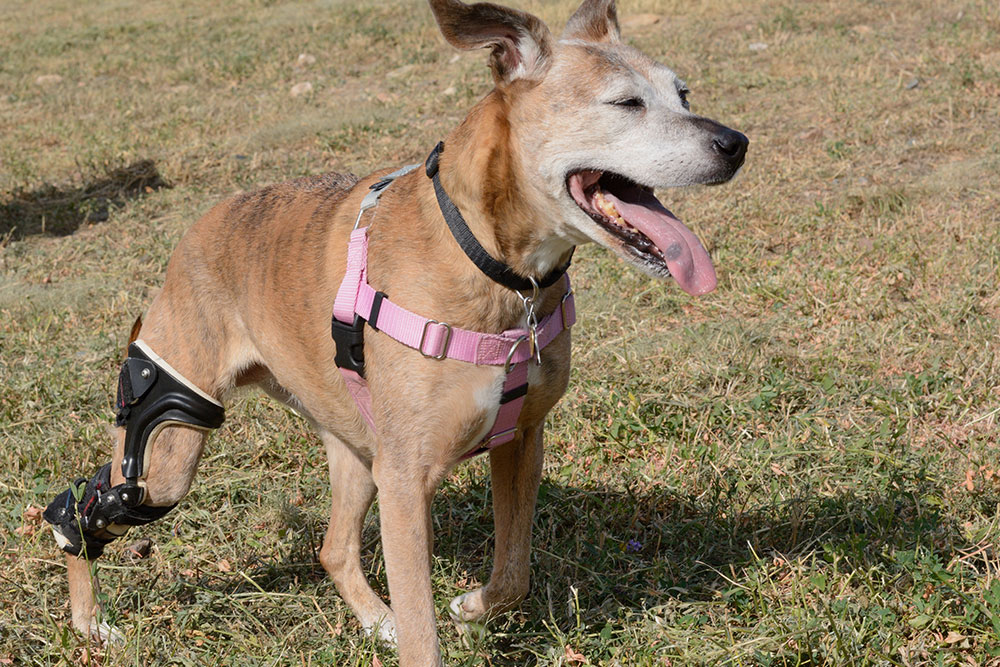
Custom stifle braces help some dogs, particularly patients who can’t have anesthesia and small dogs already headed down the non-surgical path. A brace has to fit precisely, come on and off daily, and stay clean against the skin, and rub sores are common in a humid climate. No brace stops the tibia from shifting the way a surgical repair does, and it doesn’t help rebuild muscle, so it’s a comfort tool rather than a substitute for stability in an active dog.
My dog is 11. Is that too old for surgery?
Age isn’t a disease, and plenty of senior dogs come through cruciate surgery beautifully. What matters is the rest of the picture: heart and lung function, kidney and liver values on bloodwork, body condition, and how much that dog still wants to do. A comfortable, engaged 11-year-old with clean labs is often a better candidate than a heavy, sedentary 6-year-old. Bloodwork and a thorough exam answer the question far better than the birthday does.
Getting Your Dog Comfortable on That Leg Again
A cruciate injury asks a lot of a household: a decision made under pressure, weeks of confinement, and a dog who feels great long before the knee is ready. Bayview Animal Hospital in Saint Petersburg handles the exam and imaging, coordinates the surgical referral when that’s the right call, and keeps the joint comfortable afterward with laser therapy and arthritis support as your dog gets older.
If a back leg is bothering your dog, schedule a visit and let’s take a good look at that knee. We see urgent cases during our open hours, and if your dog can’t bear weight on a leg after we’ve closed for the day, the nearest veterinary ER is the right stop.




Leave A Comment