

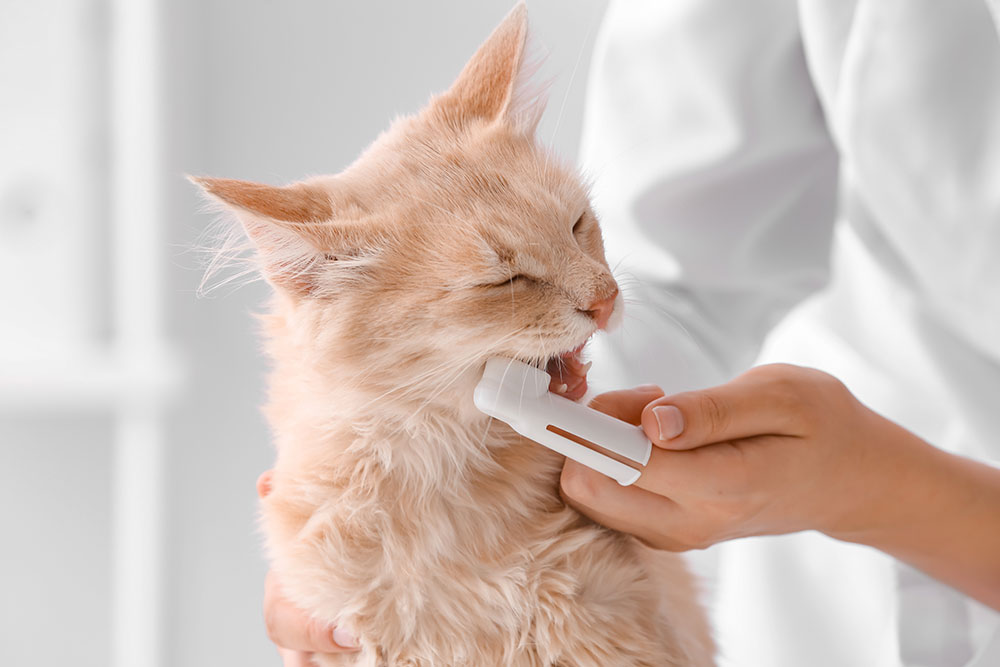
Daily toothbrushing guards a dog or cat’s heart by holding back the gum disease that lets mouth bacteria slip into the bloodstream. Anyone who has wrangled a cat at the bathroom sink knows the effort can feel absurd, yet that simple scrub is the first layer of protection every other layer builds on. Chronic oral infection strains more than the heart, since pets with severe periodontal disease show more changes in the heart, kidneys, and liver than pets with healthy mouths. Every layer you add, from the brush at the sink to dental chews to a professional cleaning, trims that burden before it builds.
Treating the mouth as part of the whole body is how we practice at Bayview Animal Hospital. Our dental cleanings for dogs and cats in Saint Petersburg clear away the plaque and bacteria a toothbrush cannot reach, and our in-house bloodwork checks organ health before any pet goes under anesthesia. Because dental disease builds fastest in senior mouths, we give aging pets and their hearts close attention at every wellness exam. If your pet’s breath has become hard to ignore, or it has simply been a while since anyone looked, request an appointment and we will put together a prevention plan that fits your pet.
Start Here: The Mouth-Heart Basics
- Bacteria from infected gums can enter the bloodstream and may fuel inflammation that reaches the heart valves, which is why a healthy mouth supports a healthier heart.
- A professional cleaning under anesthesia, with full-mouth dental X-rays, is the only way to treat the disease hiding below the gumline, where most of the damage happens.
- Daily brushing at home, backed by proven dental products, is the simplest way to slow the buildup that puts extra strain on your pet’s whole body.
What are the early warning signs of heart disease in dogs and cats?
The early signs of heart disease in dogs are easy to miss: a lingering cough that worsens at night, tiring quickly on walks, fast or labored breathing, and the occasional fainting spell. These shifts tend to arrive slowly, which is exactly why they get chalked up to a pet simply getting older.
Some pets slide gradually over months; others seem fine until a sudden episode makes the problem obvious. Mitral valve disease is the most common heart condition in small-breed dogs, caused by a valve that leaks and forces the heart to work harder over time. Small breed dogs are also at higher risk for severe dental disease due to the large number of teeth packed into a tiny space, so the combination of heart valve disease and dental disease is a real problem. Cats play by different rules, often hiding cardiac trouble so well that rapid or open-mouth breathing is the first real clue.
Here’s what those signs can point to and how fast to act.
| Sign you might notice | What it can point to | How fast to act |
| Cough that worsens at night or after lying down | Fluid backing up from a struggling heart | Book a visit soon |
| Tiring quickly or lagging behind on walks | Reduced output from the heart | Book a visit soon |
| Fast or heavy breathing at rest | Fluid in or around the lungs | Same-day or urgent |
| Open-mouth breathing in a cat | Serious respiratory distress | Emergency |
| Fainting or collapse | Dangerous drop in blood flow | Emergency |
Not every cough is a heart problem, and not every lazy afternoon is a red flag. When something does look off, chest radiographs and bloodwork give us the first clear picture, and our in-house diagnostics let us start that workup without delay. If the heart muscle needs a closer look, a cardiac ultrasound may be the next step, and we’ll talk through where that can be done. Real breathing distress or a collapse is an emergency: come in right away during our open hours, or get to the nearest veterinary ER if we’re closed.
What’s periodontal disease, and how does it get so bad?
That eye-watering smell when your dog yawns usually starts below the gumline. Periodontal disease is a bacterial infection of the tissues that hold the teeth in place, and it worsens because it builds quietly for months before anything shows on the surface.
The tartar you can see is only part of the problem. Bacteria collect along the gumline and trigger an immune response that chews through soft tissue and bone. The five stages of periodontal disease run from mild plaque and gingivitis to gum recession, bone loss, and eventually loose or lost teeth.
| Stage | What’s happening | What it means for your pet |
| 0: Healthy | Teeth are clean, with no or minimal tartar | Perfect time to start home care |
| 1: Gingivitis | Plaque irritates the gums; no bone loss yet | Reversible with a cleaning |
| 2: Early | Up to a quarter of the tooth’s support is gone | First bone changes show on X-ray |
| 3: Moderate | 25 to 50 percent of support lost; gums recede | Some teeth need treatment |
| 4: Advanced | More than half the support is gone | Loose teeth; extractions likely |
Catch it at stage one, when it’s still just inflamed gums, and a cleaning can turn the picture around. That’s why our professional dental exams and cleanings assess the whole mouth, roots and gumline included, not only the crowns you can see.
Does dental disease really cause heart disease, or is that a myth?
The honest answer lives between the two extremes: dental disease hasn’t been proven to directly cause heart disease, yet the two appear together often enough that the connection is real and worth taking seriously.
What have the studies found?
The connection between gum disease and heart problems is clearest in dogs with advanced periodontal disease, who show higher rates of heart valve inflammation and congestive heart failure. More research is being done, but the link is clear: heart disease and dental disease are connected.
The association has been much more closely studied in humans. Studies have shown that in people, brushing less than two minutes, twice a day resulted in three times the risk of cardiovascular diseases. Other studies have shown that humans with periodontal disease have two to three times the risk of heart attack, stroke, and other serious cardiovascular events. While heart disease in dogs, cats, and humans is hard to compare directly, the underlying fact is the same: chronic inflammation stresses the entire body.
How could bacteria in the mouth reach the heart?
The proposed tie between oral health and heart disease centers on bacteria from inflamed gums slipping into the bloodstream and fueling inflammation that reaches the heart valves. Every time an infected mouth chews, tiny amounts of bacteria can enter circulation. In theory, that steady drip may seed valve inflammation or allow bacteria to lodge on the valve itself, a condition called endocarditis, or add strain to a heart already under pressure. Pets already living with a murmur or valve disease sit at the higher-risk end, which is why our veterinarians fold a careful mouth check into every cardiac recheck.
What happens during a professional dental cleaning?
A professional dental cleaning is a full medical procedure done under general anesthesia, not a quick scrape at the visible tartar. It lets us clean under the gumline, image every root, check each tooth, and treat problems in a single visit while your pet feels nothing at all.
Why does a real cleaning need anesthesia and X-rays?
Full-mouth dental X-rays reveal what a visual exam can’t: root damage, bone loss, and infection hiding beneath the gumline. Anesthesia is what makes that thorough look possible, keeping your pet still and pain-free so we can probe each tooth, clean deep pockets, and capture those images safely. Awake cleanings, by contrast, polish the crowns and leave the disease untouched.
What happens step by step on procedure day?
Before anything starts, we run pre-anesthetic bloodwork and we may recommend chest X-rays for seniors or pets with known heart disease. We then build a personalized anesthetic plan around your pet’s age and health. From there the day follows a clear path: full-mouth radiographs, scaling and polishing above and below the gumline, probing to measure gum health, and monitored recovery once the work is done. Pain control is built in, not tacked on, and we walk you through every finding afterward. Some teeth are simply too damaged to save, so extractions are occasionally part of the plan, and our team focuses on keeping your pet stable and comfortable from first breath to last stitch.
How can you protect your pet’s teeth at home?
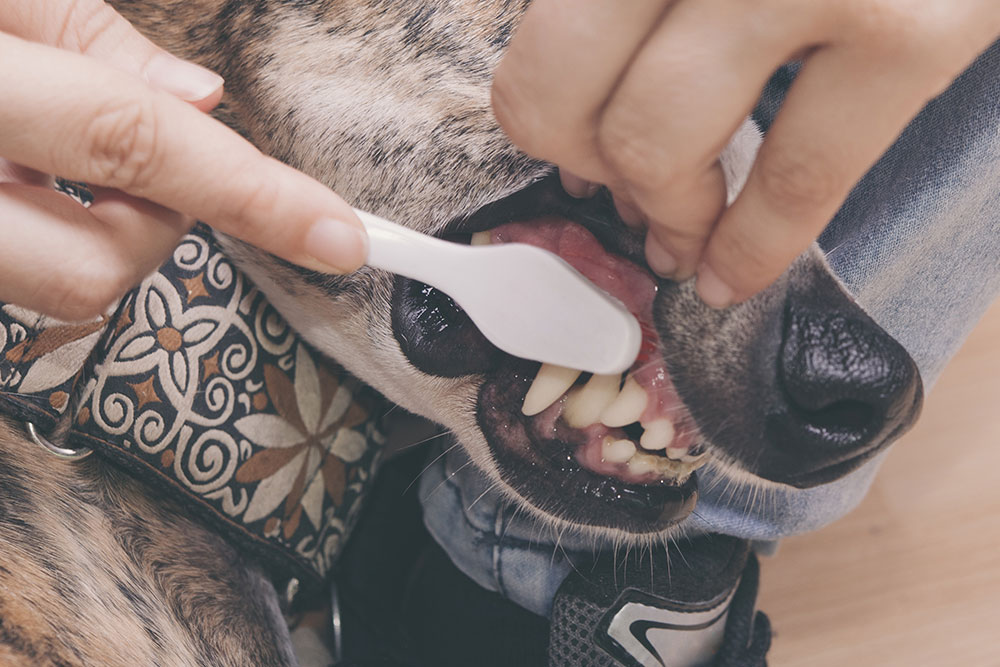
The most effective home care is also the least glamorous: brushing your pet’s teeth every day, if you can manage it, keeps plaque from ever hardening into tartar. This also decreases the amount of bacteria in the mouth and improves gum health; gums that aren’t inflamed and bleeding are less likely to seed oral bacteria into circulation that could affect your pet’s heart. Round it out with a proven dental chew, a water additive, or a dental diet, and you cover the spots a brush tends to miss. Small, consistent habits beat heroic once-a-month efforts.
How do you actually brush a reluctant pet’s teeth?
Brushing teeth is doable even for a pet with strong opinions, as long as you go slow: start by letting your pet lick pet-safe toothpaste off your finger, work up to a finger brush over a few weeks, and only then introduce a soft toothbrush. Never reach for human toothpaste, since fluoride and the sweetener xylitol can be toxic to pets. It helps to anchor the habit to something you already do, like the quiet stretch after an evening walk. Aim for daily, but a few solid sessions each week still helps.
Which dental products are actually worth buying?
A VOHC seal of acceptance on a dental chew, water additive, or dental diet means the product reduced plaque or tartar in testing, not just in its marketing. Dental diets work mechanically, with larger kibble that scrubs the tooth as your pet bites down, while additives and treats target buildup chemically or through gentle abrasion. Supervise anything your pet gnaws on, since an enthusiastic chewer can crack a tooth on something too hard. All of it works best paired with routine dental care on a schedule we set together.
Why does dental care matter for your pet’s whole body?
A clean and pain-free mouth pays dividends across the whole body: less bacterial load on the heart, kidneys, and liver, a steadier appetite, and a pet who simply feels better day to day. Dental treatment is preventive medicine, not cosmetic upkeep.
Addressing the mouth early is one of the highest-value moves in a pet’s care plan, especially for seniors, whose gum disease and heart changes tend to advance side by side. The right approach looks different for a healthy three-year-old than for a fourteen-year-old with a murmur and stiff joints, which is why we build it around each pet’s age, health, and risk factors, alongside the senior and mobility care that keeps older pets moving.
Frequently Asked Questions About Dental and Heart Health in Pets
Can a dental cleaning fix my pet’s existing heart murmur?
A cleaning won’t reverse a murmur or repair a leaking valve. What it can do is lift a chronic source of bacteria and inflammation off a heart that’s already working hard. For pets with known heart disease, we stabilize the heart first, tailor the anesthesia carefully, and coordinate the timing so the mouth gets treated without adding cardiac strain.
Is anesthesia safe for my senior pet’s dental?
Age itself isn’t a disease, and most healthy seniors handle anesthesia well. Pre-anesthetic bloodwork, an individualized protocol, and close monitoring are what keep it safe, not a birthday on the chart. It’s also worth weighing the other side: leaving a painful, infected mouth alone carries its own real risks, and for many older pets, treating the problem is the safer long-term choice.
Do cats get dental-related heart problems too?
Cats absolutely get periodontal disease, along with painful tooth-resorption lesions of their own, so their dental care is never optional. That said, the heart research is strongest in dogs, and the cardiac conditions cats face most, such as thickening of the heart muscle, aren’t clearly tied to gum disease. The logic still holds: chronic oral infection taxes the whole body, so a healthy mouth is good for a cat either way.
Ready to Give Your Pet’s Heart One Less Thing to Fight?
Caring for your pet’s teeth is one of the most concrete investments you can make in their comfort and their years. A dental procedure can feel like a big step, and our job is to make it as safe and low-stress as possible, from pre-anesthetic checks to a gentle recovery. If you have questions or your pet is overdue for a look, reach out to Bayview Animal Hospital in Saint Petersburg and we’ll take it from there.



Leave A Comment