

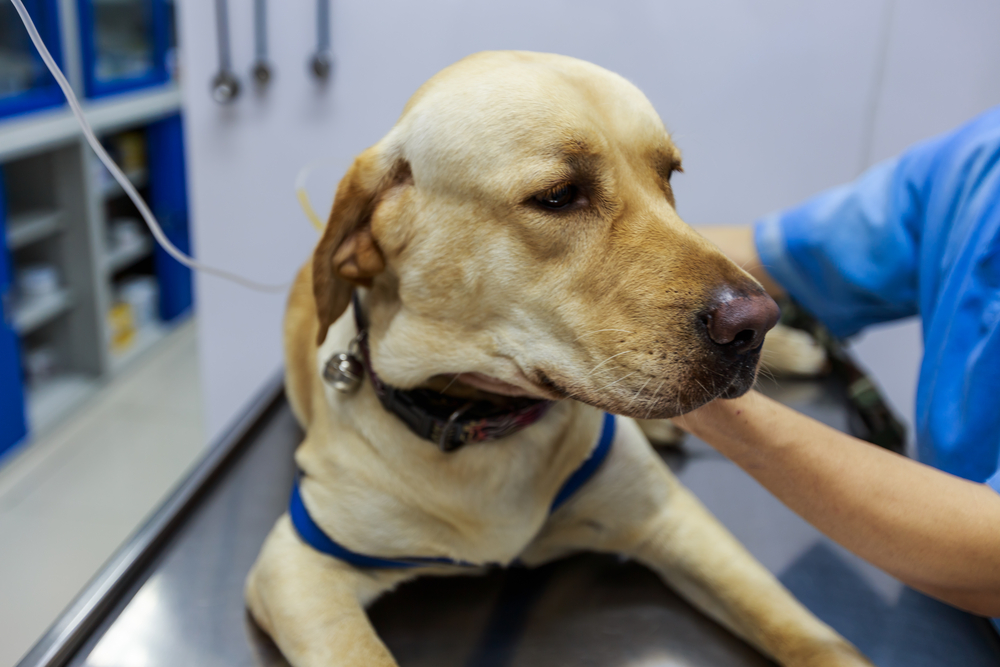
A senior screening visit asks far less of your dog or cat than it sounds like it would: a nose-to-tail exam, a blood draw, a urine sample, and recommendations for any other testing based on your pet’s individual risk factors. From check-in to checkout it feels like a regular wellness appointment, just one that comes home with much better information. Those samples and any recommended follow-up tests screen the thyroid, the kidneys and liver, the heart, and the joints, the places where age-related disease starts quietly and responds best to early treatment. Some slowing down is a normal part of getting older, but plenty of what gets written off as old age is actually treatable, which is why screening starts around age seven for most dogs and closer to ten for cats.
Taking care of your pet like we would our own is the promise Bayview Animal Hospital was built on, and our senior workups in Saint Petersburg put it into practice with in-house blood work, urinalysis, and digital X-rays. A reference laboratory backs up our in-house testing when thyroid panels or other advanced work is called for, so an aging pet’s questions get complete answers. When screening turns up arthritis, we can also talk through aging pet treatments like laser therapy or monthly pain injections to keep an older dog or cat comfortable and moving. If your pet is closing in on those senior years, schedule a visit and we will shape the workup around them.
Senior Screening in Four Points
- Screening can catch thyroid, kidney, heart, and joint disease before your dog or cat ever looks sick, which is exactly when treatment works best.
- Most dogs reach their senior years around age seven, cats closer to ten, and both benefit from twice-yearly exams paired with lab work.
- A senior workup usually combines blood work, a urine sample, a blood pressure reading, and imaging like X-rays, with the exact mix tailored to your pet.
- Comparing results year over year lets us spot a worrying trend even while each number still reads as normal.
Why Isn’t a Yearly Checkup Enough Once a Pet Turns Senior?
Catching disease before a pet acts sick is exactly what preventive testing is built to do, which is why a once-a-year checkup rarely tells the whole story for an aging dog or cat. A year is a long time in senior life, and quiet problems can take hold between visits.
A senior year is not much like one of ours. Many dogs and cats age the equivalent of four to six human years in that span, so a great deal can shift between one birthday and the next. That is why we recommend seeing older pets twice a year rather than once, with targeted testing built into at least one of those visits.
There is another reason single snapshots fall short. A kidney value or a thyroid level can sit inside the normal range and still be climbing steadily for your individual pet. Watching that trend over time is often what flags trouble early, long before the result crosses into the abnormal column and long before your dog or cat feels any different.
What Does a Complete Senior Screening Include?
Senior pet care recommendations call for twice-yearly exams paired with blood, urine, and blood pressure checks once a pet crosses into their senior years. No two workups look exactly alike, though.
A twelve-year-old cat with a history of weight loss needs a different plan than a healthy seven-year-old Labrador, and our veterinarians tailor each screening plan to your pet’s age, breed, lifestyle, and anything you have noticed at home. A typical plan pulls from a menu: a full blood panel, a urinalysis, a blood pressure reading, and imaging such as X-rays when the exam or the history points that way.
What Can Senior Blood Work Catch Before Symptoms Start?
Blood work is an internal snapshot, a look at the organs and cells that no physical exam can reach. A single draw can reveal anemia, early kidney or liver stress, thyroid imbalance, and exposure to heartworm or tick-borne disease, often months before your dog or cat shows the first outward sign.
A senior panel bundles several diagnostic tests that each look at a different system. Here is what the core pieces measure and what they can turn up.
| Test | What it measures | What it can catch |
| Complete blood count (CBC) | Red and white blood cells and platelets | Anemia, infection, inflammation, some cancers |
| Chemistry panel | Kidney and liver values, blood sugar, proteins, electrolytes | Kidney disease, liver disease, diabetes, dehydration |
| Heartworm and tick-borne screen | Antigens and antibodies from parasites | Heartworm, Lyme, Ehrlichia, Anaplasma |
| Thyroid testing | Thyroid hormone levels | Underactive thyroid in dogs, overactive thyroid in cats |
The real power shows up over time. Once we have a baseline from a healthy year, every future panel has something to compare against, and that early warning is the whole point of testing a pet who feels perfectly fine.
Why Does Blood Pressure Matter for an Older Dog or Cat?
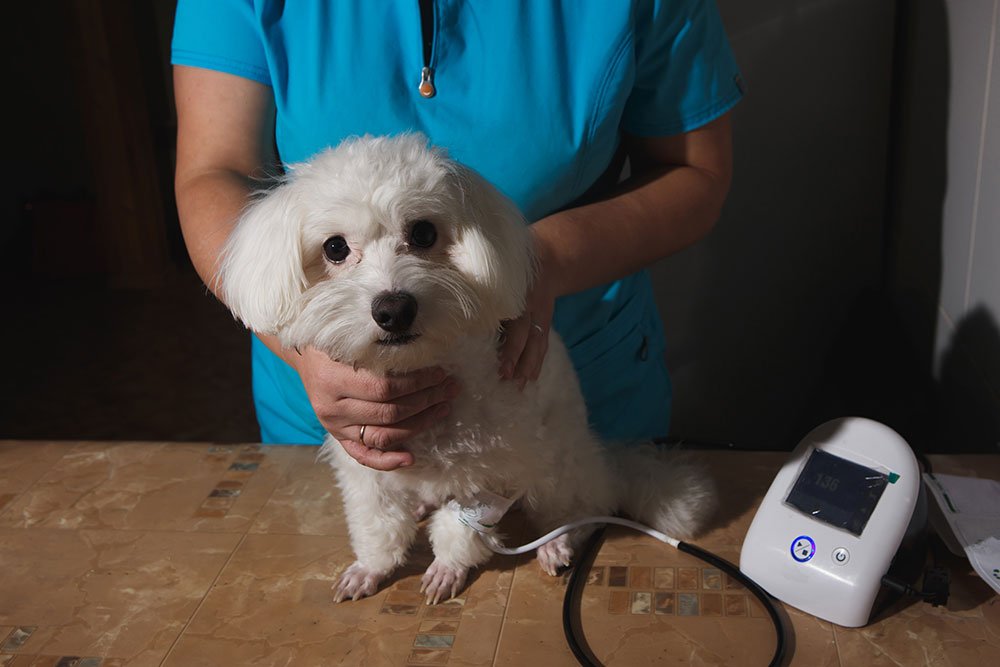
Left unchecked, hypertension quietly damages the eyes, kidneys, heart, and brain, and it usually rides along with another condition such as kidney disease or an overactive thyroid. High blood pressure usually has no obvious symptoms, so a senior pet can be living with real organ strain that only a reading picks up.
Checking it takes just a few minutes. A small inflatable cuff goes around a paw or the tail, much like the arm cuff at your own doctor, and the reading is painless enough that most pets barely notice. When the number runs high, the plan is usually two-pronged: a medication to relax the blood vessels and treatment of whatever underlying disease is pushing the pressure up. Sudden blindness in an older cat is sometimes the very first clue of dangerously high readings, which is exactly the crisis a routine check helps head off.
What Can a Urine Sample Reveal About Your Pet’s Health?
Urinalysis reveals whether the kidneys are still concentrating waste properly and can flag infection, diabetes, or protein loss well before those problems show up in the bloodstream. Those few drops also speak to hydration and bladder health, which makes urine one of the most information-dense samples we collect.
Urine and blood work are a team, and reading them together tells a fuller story than either can alone. Blood might show a rising kidney value, while the urine confirms whether the kidneys are keeping up, the detail that pins down what is really going on. A sample can also catch a brewing bladder infection or crystals in a pet who has shown no sign of trouble at home.
How Do We Screen a Senior Pet’s Heart?
Heart disease often builds silently, and many dogs and cats show no cough, no fatigue, nothing at all until the muscle is already struggling. Cardiac screening looks for the early signs a stethoscope alone can miss, and every tool involved is noninvasive and well tolerated, so even an anxious senior pet can get through it comfortably.
Depending on what we hear through the stethoscope and what your pet’s history suggests, screening can draw on a few complementary tools, some done here and some with a specialist.
| Screening tool | What it checks |
| Chest X-rays | The size and shape of the heart and the lungs around it |
| NT-proBNP blood test | A hormone the heart releases when the muscle is under strain |
| ECG | The heart’s electrical rhythm, catching irregular or abnormal beats |
Chest images come from our digital X-rays, and the NT-proBNP marker is a simple blood draw we send to the reference laboratory. When those point toward a structural problem, the next step is often a closer look at the muscle in motion. An echocardiogram is a painless ultrasound of the beating heart that shows the valves and chambers in motion and measures how strongly the muscle is pumping, and it is usually performed by a cardiologist.
When Are X-Rays and Ultrasound Recommended for a Senior Pet?
Radiography gives a fast, noninvasive look at the size and shape of the bones, heart, lungs, and abdominal organs, which makes it a natural starting point when something feels off. Imaging usually enters a senior workup when the exam turns up a murmur, a lump in the belly, a new limp, or a lab value that needs a visual explanation.
Our digital imaging captures those X-rays in seconds and shows bone and overall organ outlines beautifully, which is why it shines for arthritic joints, an enlarged heart, or a bladder stone. Radiographs have a limit, though: they show shape, not what is happening inside a soft organ. That is where an ultrasound comes in, using sound waves to look inside the liver, spleen, and kidneys in real time and even guide a needle sample when we find something worth a closer check. When your pet needs that level of soft-tissue detail, we will talk through where an ultrasound can be arranged.
Which Age-Related Conditions Does Senior Screening Catch?
Senior screening is really a wide net, cast to catch the handful of diseases that grow more likely with age. The same panel of blood, urine, pressure, and imaging can surface thyroid trouble, kidney and liver disease, heart changes, cancer, arthritis, and dental infection, each of which does far better with an early start than a late one.
Thyroid Disease in Dogs and Cats
The thyroid runs the body’s metabolism, and it tends to misbehave in opposite directions depending on the species. In dogs, hypothyroidism slows the metabolism to a crawl, producing the weight gain, low energy, and thinning coat that are easy to write off as simply getting older. In cats, hyperthyroidism does the opposite, revving the metabolism so a cat loses weight despite a ravenous appetite while the extra hormone strains the heart and kidneys. Both conditions show up on blood work, and both are manageable, hypothyroid dogs with a daily pill and hyperthyroid cats with medication, a special diet, or a curative radioiodine treatment.
Chronic Kidney Disease
Chronic kidney disease is one of the most common problems in senior pets, and it hides so well that two-thirds of kidney function can be gone before a pet shows a single outward sign. The early clues are easy to miss: drinking more, urinating more, a little weight slipping off. Screening catches it far sooner, and while the damage cannot be reversed, the right diet, fluids, and medications can slow it down and keep your dog or cat feeling well for a long time.
Heart Disease
The most common heart problems split along species and size lines. Small-breed dogs are prone to mitral valve disease, a slow wearing-out of one of the heart’s valves, while large breeds more often develop dilated cardiomyopathy, where the muscle weakens and stretches. Cats tend toward hypertrophic cardiomyopathy, a thickening of the heart wall that can stay hidden for years. A cough, tiring on walks, or faster breathing at rest all deserve a same-day look, though early detection usually comes from a screening exam long before those signs appear. Caught early, many pets do very well for years on cardiac medication, so a diagnosis here is far from the end of the road.
Cancer
The odds of cancer in pets climb with age, and many forms respond far better to treatment when a routine exam or an X-ray catches them early rather than after a pet is visibly unwell. A new lump, one that is growing or changing, unexplained weight loss, or a sore that will not heal all deserve a look. Some breeds carry higher risk for specific tumors, and any suspicious mass gets evaluated with a simple needle sample or a biopsy to tell the harmless from the serious. Most of the lumps we check turn out to be nothing, which is exactly why checking is worth it.
Liver Disease
The liver is a quiet organ that rarely complains until it is really struggling, which is why blood work is usually what raises the first flag. Elevated values can appear long before appetite loss, vomiting, or a yellow tinge to the gums and eyes. Many liver problems in older pets are manageable once we know the cause, whether that means a diet adjustment, a supplement to support the organ’s cells, or treating an underlying condition. The sooner we find it, the more options stay on the table.
Arthritis and Joint Pain
Arthritis is one of the most underdiagnosed problems in older pets, partly because dogs and cats hide pain so well. A dog may just slow down on walks, and a cat may stop jumping to the windowsill they used to own. We diagnose it from the exam and X-rays, then build comfort from several angles: weight control, joint supplements, non-steroidal anti-inflammatory pain medications (NSAIDs), and newer monthly injections like Librela for dogs and Solensia for cats that target arthritis pain directly. Laser therapy uses focused light to calm inflammation and ease sore joints without medication, which makes it a comfortable option for stiff senior pets, and it is one of the aging pet therapies we reach for often.
Dental Disease
Dental care is about far more than fresh breath, because the bacteria living under an inflamed gumline travel through the bloodstream and tax the heart, liver, and kidneys. Gum infection is one of the most common findings in senior pets, and the fix is a professional dental cleaning under anesthesia, which lets us clean and treat below the gumline, where the real trouble hides. Pre-anesthetic blood work, part of the same senior screening, helps confirm an older pet is a safe candidate for anesthesia. Watch for bad breath, drooling, or a pet chewing on one side, and support the mouth at home with regular brushing and vet-approved chews between visits.
Frequently Asked Questions About Senior Screening
At What Age Should My Dog or Cat Start Senior Screening?
Most dogs are considered senior around age seven, though large and giant breeds get there sooner, closer to five or six, since they age faster. Cats usually reach their senior years around ten or eleven. A good rule of thumb is to start baseline blood work and a urine sample at the beginning of that window, while your pet still feels great, so we have healthy numbers to compare against later. If your pet is already past that age, it is never too late to begin.
Is All This Testing Stressful or Painful for My Pet?
For most pets, a senior screening feels like an ordinary visit. The blood draw takes only seconds, a urine sample is often collected gently, and a blood pressure reading is completely painless. X-rays are quick and require no needles, and most dogs and cats hold still with a little reassurance rather than sedation. If your pet tends to get anxious at the vet, tell us ahead of time and we can plan a calmer, low-stress appointment shaped around them.
How Often Does a Senior Pet Really Need Blood Work?
Once a pet is in their senior years, twice-yearly exams with blood work at least once a year is the general guideline, and pets with a known condition often need it more frequently. Because older animals change faster than younger ones, a value that looked fine twelve months ago can shift meaningfully in half that time. Regular testing is what turns a surprise diagnosis into a manageable one caught early. We will set a rhythm that fits your individual pet.
Give Your Senior Pet More Good Years
The best part of screening an older pet is how often it turns worry into a plan. Catching kidney disease, a thyroid shift, or early arthritis while your dog or cat still feels good means more comfortable mornings, more slow walks, and more time together on the couch. Early is almost always easier, on your pet and on you.
When your pet is ready, reach out to schedule a senior screening at Bayview Animal Hospital. Our team in St. Petersburg will follow those results year over year and care for your senior pet with the attention they have earned.




Leave A Comment